Richard Hamilton pop art
what is it ?
The collage consists of mainly of images from American magazines
why was it made?
who created it ?Richard hamilton
3 components from the image ,find out what the image is about and why
what would I put in to replace..
-women with lamp shade on head,the artist Jo baer who posed in erotic magazines in her youth has stated that she is the burlesque woman on the sofa.
-the man is a body builder named Irvin "zabo" Koszewski,winner of mr LA in 1954
-Hamilton asserted that the rug was a blow-up from a photograph depicting a crowd on the Whitley Bay beach.
-the moon,the space race
Showing posts with label (Mock fmp)Group Project. Show all posts
Showing posts with label (Mock fmp)Group Project. Show all posts
Friday, 27 March 2015

Thursday, 26 March 2015
Parade Project
Thursday 26/03/15
Targets:
As my subject area is based around fashion,I'm working towards either a garment or an accessory.
My ideas are up in their at the minute, but today have thought about my design process, what theme i am wanting to do etc. Today i have chosen to look at traditional futuristic, which is basically where I've designed traditional, old fashioned skirts and making it look futuristic in some way, i thought of a way to make the skirt look like a cube or some sort of shape. That lead me to look into shapes and i looked at making a garment which is in a traditional old fashioned style form, I'm thinking maybe a long cape or a traditional chinese hanfu, but the print of the fabric is going to be white with all different shapes including odd tetris shapes in all different bright vibrant colours.
Next step :
working with the fabric pens,make some samples of the vibrant shapes print on fabric.
more design work
research into - traditional clothing (chinese hanfu)/pattern cutting
- futuristic/shapes/vibrant patterns/prints
- traditional ways of printing,fabric printing(screen printing,lino printing)
Targets:
As my subject area is based around fashion,I'm working towards either a garment or an accessory.
My ideas are up in their at the minute, but today have thought about my design process, what theme i am wanting to do etc. Today i have chosen to look at traditional futuristic, which is basically where I've designed traditional, old fashioned skirts and making it look futuristic in some way, i thought of a way to make the skirt look like a cube or some sort of shape. That lead me to look into shapes and i looked at making a garment which is in a traditional old fashioned style form, I'm thinking maybe a long cape or a traditional chinese hanfu, but the print of the fabric is going to be white with all different shapes including odd tetris shapes in all different bright vibrant colours.
Next step :
working with the fabric pens,make some samples of the vibrant shapes print on fabric.
more design work
research into - traditional clothing (chinese hanfu)/pattern cutting
- futuristic/shapes/vibrant patterns/prints
- traditional ways of printing,fabric printing(screen printing,lino printing)
Monday, 23 March 2015
1960s(America) Design/pop art
FLOWER POWER
When people think of America in the 1960s, they often have a romanticized idea of a decade of great music, liberal idealism, and Flower Power. It was the time when the post war baby boomers were in their adolescence, embracing counter culture ideals, expanding their minds through all kinds of drugs, and truly, living life to the fullest. The Flower Power movement reached its climax at the Woodstock Festival held in upstate New York in 1969 when an estimated 500,000 people lived in peace and harmony for three unforgettable days.
The artists developed on the styles of the fifties but there was a more contemporary feel to their work. Pop art, minimalism, abstract art, assemblage art, and environmental art gained popularity during this period. The art displays the positive attitude of the artists, reflecting the affluence and technology of the period. A lot of futuristic design was introduced in architecture. With the modernist trend, tall buildings dotted the skyline and designs tended towards streamlined contemporary.
Civil rights was one of the major issues being championed in the sixties. The feminist movement gathered momentum, fighting for equal rights. An eco drive was started to reduce pollution and preserve nature. The Peace Corps were formed to improve living standards in third world countries, promoting peace and anti-war messages to all countries. Social movements were on an increase during the sixties. There was constant competition between the Russians and the Americans with regard to outer space research throughout the decade. Automobiles made the transition to a cleaner and simpler style. The computer was also invented in the sixties.
When people think of America in the 1960s, they often have a romanticized idea of a decade of great music, liberal idealism, and Flower Power. It was the time when the post war baby boomers were in their adolescence, embracing counter culture ideals, expanding their minds through all kinds of drugs, and truly, living life to the fullest. The Flower Power movement reached its climax at the Woodstock Festival held in upstate New York in 1969 when an estimated 500,000 people lived in peace and harmony for three unforgettable days.
The artists developed on the styles of the fifties but there was a more contemporary feel to their work. Pop art, minimalism, abstract art, assemblage art, and environmental art gained popularity during this period. The art displays the positive attitude of the artists, reflecting the affluence and technology of the period. A lot of futuristic design was introduced in architecture. With the modernist trend, tall buildings dotted the skyline and designs tended towards streamlined contemporary.
Civil rights was one of the major issues being championed in the sixties. The feminist movement gathered momentum, fighting for equal rights. An eco drive was started to reduce pollution and preserve nature. The Peace Corps were formed to improve living standards in third world countries, promoting peace and anti-war messages to all countries. Social movements were on an increase during the sixties. There was constant competition between the Russians and the Americans with regard to outer space research throughout the decade. Automobiles made the transition to a cleaner and simpler style. The computer was also invented in the sixties.
Music
The start of the sixties saw the return of Elvis Presley along with a few other popular singers. The Motown record company was set up, promoting blues and rhythm. The Beatles from England also become very popular in the United States. It was really the golden age of rock music as artists like Jimi Hendrix, Janis Joplin, Grateful Dead, Bob Dylan, the Rolling Stones, the Byrds, the Who, the Beach Boys, and many others produced music which defined the era. There was a change towards psychedelic rock in the mid sixties largely due to the influence of drugs. Pop, Reggae, blues and soul were a hit with the youngsters. The mood synthesizer was developed, creating a change in the music scene with a lot of experimentation.
The sixties was also the era for a lot of musicals..Some were made into films such as My fair Lady,The Sound of Music.Radio was the main source of music.
POP ART
Pop Art was a major art movement in the mid 50s in Britain then led on to the united states in the late 50s..
the concept refers not really to the art but to the attitude towards it..
It had aspects of mass culture such as advertising and in comic books it was very popular.

This is one of the earliest works to be known as "pop art" in 1956 by Richard Hamilton.
Pop Art was a major art movement in the mid 50s in Britain then led on to the united states in the late 50s..
the concept refers not really to the art but to the attitude towards it..
It had aspects of mass culture such as advertising and in comic books it was very popular.
This is one of the earliest works to be known as "pop art" in 1956 by Richard Hamilton.
1960's(British)Design/pop art
Known as the swinging sixties and associated with the birth of british pop and fashion.


POP ART
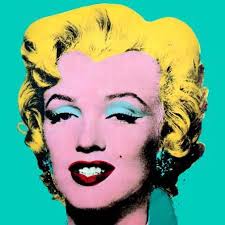
London Fashion (V&A)
Youthful clothes in the 1950s were non existent.."it was all old lady stuff" Said by Venessa Denza,Buyer.
Shaped by traditional tailoring,a very English sense of decorum.
The epitome of elegance was represented by the twelve most prominent Mayfair couturiers who belonged to the Incorporated Society of London Fashion Designers
1950s - . Sir Hardy Amies 1959
 John Cavenagh,1961
 Horrockses Fashion 1955
By the early 1960s this Mayfair generation was fading in significance, its sophisticated and elitist approach. But the Society still provided a useful precedent for younger pioneers, in its attention to cut, its inventive use of fabric and its clever approach to marketing.
'Snobbery has gone out of fashion, and in our shops you will find duchesses jostling with typists to buy the same dresses.' Mary Quant
Set up in 1955,Mary Quant's Boutique showed this new philosophy,around this time young artists,film directors and socialites grew around Kings road,known by the media as the "chelsea set".Chelsea synonymous was a brand new way of living and dressing.

It was known for its surreal window displays,mix of electic clothes,accessories and costume jewellery.
The clothes were decidedly modern. 'I want relaxed clothes,' said Quant, 'suited to the actions of normal life'.
With Quant's husband Alexander Plunkett Greene and friend Archie McNair providing the business backup, the venture was profitable, though it appeared chaotic. Some of the goods were sourced from art students, or made up overnight, and the mini shift dress soon became Quant's trademark.
'A whole new world of retail sprang up.' Felicity Green..
 John Bates,1967
 Gerald McCann 1965
 Jeff Banks,1968
Carnaby Street 1964-1972

'Working class design, British fashion, Rock and Roll, The Beatles, Carnaby Street... You had all these rebels without causes, and all of a sudden everything came together. The gods smiled.' Robert Orbach, retailer.
 Annacat 1968
 Foale&tuffin 1968
 Countdown 1970
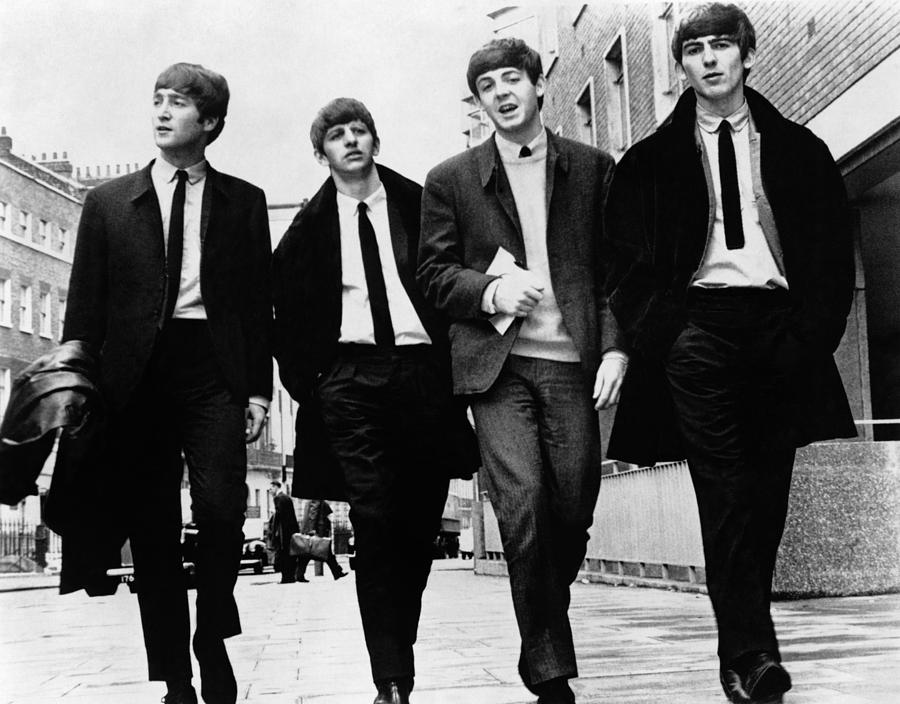
- First man in space
- first human to walk on the moon
- england won the world cup
- coco pops
- fridges and cookers
- corrie
- spacewar video game
- The beatles 1963 hit with "please,please me" through the "flower power" generation
- Doc Martens
- the Twiggy look
- wigs
- love beads
- body art
- mini skirts
POP ART
London Fashion (V&A)
Youthful clothes in the 1950s were non existent.."it was all old lady stuff" Said by Venessa Denza,Buyer.
Shaped by traditional tailoring,a very English sense of decorum.
The epitome of elegance was represented by the twelve most prominent Mayfair couturiers who belonged to the Incorporated Society of London Fashion Designers
1950s - .
Sir Hardy Amies 1959John Cavenagh,1961 Horrockses Fashion 1955
By the early 1960s this Mayfair generation was fading in significance, its sophisticated and elitist approach. But the Society still provided a useful precedent for younger pioneers, in its attention to cut, its inventive use of fabric and its clever approach to marketing.
'Snobbery has gone out of fashion, and in our shops you will find duchesses jostling with typists to buy the same dresses.' Mary Quant
Set up in 1955,Mary Quant's Boutique showed this new philosophy,around this time young artists,film directors and socialites grew around Kings road,known by the media as the "chelsea set".Chelsea synonymous was a brand new way of living and dressing.
It was known for its surreal window displays,mix of electic clothes,accessories and costume jewellery.
The clothes were decidedly modern. 'I want relaxed clothes,' said Quant, 'suited to the actions of normal life'.
With Quant's husband Alexander Plunkett Greene and friend Archie McNair providing the business backup, the venture was profitable, though it appeared chaotic. Some of the goods were sourced from art students, or made up overnight, and the mini shift dress soon became Quant's trademark.
'A whole new world of retail sprang up.' Felicity Green..
21 Shop sold clothes that were 'simple, zany, not for squares'. The buyer, 22-year-old Vanessa Denza, sought out new talent in the Royal College of Art and worked closely with young designers. Brilliant at turnover, she could get an order of 1000 dresses delivered within a week and sold a week later.
'Like a dam bursting' (to use Denza's phrase) other retailers soon followed her lead, with Young Jaeger, Harrods' Way In and Miss Selfridge establishing themselves as household names.
John Bates,1967Gerald McCann 1965Jeff Banks,1968Carnaby Street 1964-1972
'Working class design, British fashion, Rock and Roll, The Beatles, Carnaby Street... You had all these rebels without causes, and all of a sudden everything came together. The gods smiled.' Robert Orbach, retailer.
In the early days, the clientele was linked to showbusiness. Then, from the mid 1960s, working-class Mods came flocking into the brash outlets of John Stephen (the 'King of Carnaby Street') in search of sharp Italian-style suits. By 1968 shoppers could also find mini-dresses, kaftans, shirts and accessories provocatively emblazoned with patriotic symbols and counter-cultural slogans.
Carnaby Street has often been dismissed as a garish tourist trap. But in its hey-day the clothes and attitude sold there revealed the key Sixties characteristics of innovation, iconoclasm and fun. Above all, they echoed the prevailing spirit of sexual and political revolution.
London's bohemia 1967–1973
Annacat 1968Foale&tuffin 1968Countdown 1970parade project work
Automatic drawing whilst listening to degenerate music..


Jackson pollock related work...


I tried to relate my work to my subject area in fashion illustration with this piece..
Friday, 20 March 2015
what i know now that i didnt...
I know now that the 1950s was a time where people were getting over the war and more inventions were created within furniture, colours, boats etc.
Abstract expressionism became popular due to Jackson Pollock..
People were happier, more holidays like camping and going on boats..
Rationing was still going for food and industries, metals.
Families worked together in their routines, the mother/wife in the kitchen. the father going to work, children having their hair cut, a good basic routine.
Films changed, sci-fi, comics became popular..
Abstract expressionism became popular due to Jackson Pollock..
People were happier, more holidays like camping and going on boats..
Rationing was still going for food and industries, metals.
Families worked together in their routines, the mother/wife in the kitchen. the father going to work, children having their hair cut, a good basic routine.
Films changed, sci-fi, comics became popular..
1950s/abstract expressionism
Britain in the 1950s
Elaine De Kooning -

"Inspiration is indispensable to my work, but it is hard to come by. It is there or it is not; it is a gift of the gods."
While Elaine de Kooning did use gestural brushstrokes in most of her work, much in the tradition of the "action" painters, Elaine's work was figurative and representational, at least to some degree, and her canvases were rarely purely abstract (in the vein of Mark Rothko or Jackson Pollock).
she was inspired by a lot or art as an avid world traveler, which helped her become more diverse in the abstract expressionism movement.
she experimented with sculpture, etchings and subject matter inspired by cave drawings, all in addition to her wealth of painting, which included everything from watercolors and still lifes to abstractions and formal portraits.


- still on rationing on food and industry, such as metals.
- the decade of desperate re-building
- guards trousers
- new inventions such as-slide up curtains, cabinets, electric beds
- the Cold War (it was called cold because there was no major fighting directly between the two sides, but big regional wars.
- more bright colours in furniture and clothes
- more excitement in holidays
- sci-fi, comics etc.
- Jackson Pollock
- Mark Rothko
Elaine De Kooning -
"Inspiration is indispensable to my work, but it is hard to come by. It is there or it is not; it is a gift of the gods."
While Elaine de Kooning did use gestural brushstrokes in most of her work, much in the tradition of the "action" painters, Elaine's work was figurative and representational, at least to some degree, and her canvases were rarely purely abstract (in the vein of Mark Rothko or Jackson Pollock).
she was inspired by a lot or art as an avid world traveler, which helped her become more diverse in the abstract expressionism movement.
she experimented with sculpture, etchings and subject matter inspired by cave drawings, all in addition to her wealth of painting, which included everything from watercolors and still lifes to abstractions and formal portraits.
Wednesday, 18 March 2015
Parade 1917
Picasso and dance parade,performed in paris in 1917
with music by Eric Satie and a one act scenario by Jean Cocteau,for Sergei Diaghilev's ballets russes.
Set designed by Pablo Picasso.


the costumes..
somewhat surreal


Picasso inspired Fashion...

with music by Eric Satie and a one act scenario by Jean Cocteau,for Sergei Diaghilev's ballets russes.
Set designed by Pablo Picasso.
the costumes..
somewhat surreal
Picasso inspired Fashion...
Subscribe to:
Posts (Atom)